
As I researched eportfolios (and the use of student portfolios as a whole) this week, I was reminded of several of the teachers I worked with when I was a student. I am fortunate to have had a phenomenal combination of teachers who pushed, encouraged, and inspired me throughout my secondary school education. In some way, each teacher shaped who I am today, but as I reflect on my experience in light of what I have learned about student portfolios, the portfolio approach to learning seems to have been best implemented by those who taught the arts. My art teachers were very forward-thinking, and one in particular was encouraging us to develop eportfolios in the early 2000’s. While the technology was still developing at the time and our portfolios were hosted locally, she had integrated the collection of our assignments, student selection of particular projects that showcased specific skills, and personal reflection on the work throughout the duration of the year.

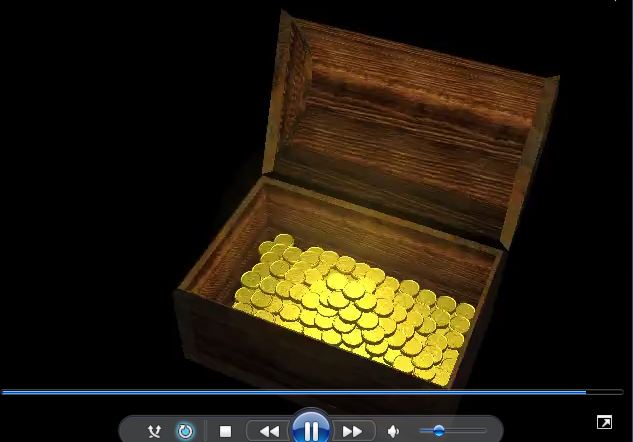


In this trip down memory, lane I was able to locate a few of the items from my portfolio that I had created using LightWave 3D in 2003-2004.
As an educator who has been exploring the possibility of implementing eportfolios into my own classes, I am impressed by the authentic opportunity for learning, assessment, and presentation that eportfolios can provide. One of the challenges of assessing student skill development throughout the sciences is that the measurement of a skill on a traditional assessment is often dependant on content knowledge. Consider the student who is asked to develop a lab procedure to explore the relationship between the force acting on a object, the mass of the object, and resulting acceleration. A successful procedure will require some content-specific background knowledge, such how a system of photogates work and what raw data is actually being collected. Difficulty creating a valid procedure come arise from the process of writing a procedure itself, or from misconceptions about the physics principles related to this lab. This is relatively simple example, and ideally the teacher would provide enough background information and context to support the student in writing their procedure, but it illustrates the point that skills and content knowledge are challenging to isolate in science. This limitation of a traditional assessment brings into question the effectiveness of measuring a transferable skill apart from content knowledge.
The portfolio allows for a broader scope of the students’ work – if multiple lab procedures related to a variety of science topics are included in the portfolio, trends, similarities, differences, and improvements could be observed that would transcend the students’ understanding of a particular content. In addition to removing the content barrier, a portfolio gives a durational scope that a single assessment does not. While a traditional assessment provides a snapshot of student skills, a portfolio provides the opportunity to measure growth over time.
A practice that I have tried to implement in some of my classes during the past few years is the intentional opportunity for student reflection. After completing a lab report, students would go through a peer-review and self-reflection process. Part of this required students to set a personal goal for the subsequent lab report and reflect on their success of completing the previous goals. While students were able to observe their own growth from lab to lab, the opportunity to see growth over a year (as provided by a portfolio) could provide powerful insight as to how they can grow as a learner. As I discussed in my earlier post exploring blogs in classroom, expanding the portfolio concept to include multiple courses taken throughout a high school career would provide even greater insight.
As a learner in pursuit of a graduate degree, I believe that a portfolio would provide a more meaningful opportunity to make connections between knowledge and skills that I have developed through various classes. This would allow for deeper personal growth and provide a tool that would better represent to others what I accomplished in this program. I appreciate the structure of ETEC 524 in that rather than taking traditional assessments about key elements in educational technology, it permits the opportunity to experiment with new tools a construct a portfolio of artifacts utilizing what we have found to work well for our particular needs. If a similar approach were taken in non-ETEC courses, a graduate student could develop a portfolio of resources that could directly be used in the classroom. This would demonstrate comprehension of new content, model an ability to integrate new learning into instructional practices, and provide material that could be directly used with future students. Traditional assessments do afford an instructor to provide quick feedback on the comprehension of content, which is helpful to receive as a learner, but the development of a portfolio of lesson plans or related lab activities for classes in my content area would be a welcomed addition to the program. This would allow me to take what I have learned back to colleagues in my school and be able to offer tangible instructional tools that they could implement in their classes, as well. There is also an element in the selection process that allows me as a learner to identify what I believe are the key understandings I want to hold onto, which provides a better foundation for my future learning. To be clear, I have only been a student at TAMUC for two weeks, and in that short window I can see that I have already learned a lot, but an eportfolio could make that learning more meaningful for future students (both future graduate students at TAMUC and future students in my classroom).
While I see the benefit of developing portfolios in all other classes, my preference would be to have the ability to choose in which courses I would be assessed in this manner. The reality is that I am investing a lot of time developing the artifacts for this course, and while I see the value of this practice, I need to have balance with other commitments in my life. Between taking a full graduate course load, teaching full time (in a new remote setting), and raising a family, time is precious. If time were not an issue, my preference would be assessment through eportfolios in each class, but in my present situation, it is helpful to be able to do some homework, take a quiz, and move onto the next topic for some classes.
When considering both physical and electronic portfolios, both share the affordance of collecting – a valuable study skill that even students who are not building a portfolio should practice. In my experience, students who demonstrate organization keep a record of all notes and created work throughout a course generally are more prepared when it comes to taking a final assessment. The organized student has an anthology of the topics covered, sample problems they have worked through, and models of skills they have developed and applied. This allows students to efficiently review all required materials prior to a summative assessment. Both formats of portfolios naturally build off of this helpful study skill.
Where eportfolios diverge from the paper model lies in the ability to store virtually limitless numbers of work samples, organize into digital folders, annotate previous assignments without changing the quality of the original work, and easily make connections by linking between samples and outside sources. I do find that there is a benefit to marking up a paper document with a pen or pencil – the physical act of writing does spur new thinking. However, that alone should not be a reason to get locked into the physical portfolio, as current stylus technology makes writing on a computer very achievable. For students documenting large constructed or non-physical projects (pottery, sculptures, or a performance recording in the arts; a model constructed for an engineering project) the ability to store a variety of media (video, image, sound file) formats digitally offers a better option. A digital portfolio is also easier to share with peers, instructors, or future employers/university admission committees). This opens the door to solicit feedback from a greater variety of stakeholders and to showcase personal strengths and accomplishments to those assessing the portfolio author.
In my previous post about blogging, I had explored the blog as a possible replacement for a traditional lab notebook in my classes. I think the idea of an eportfolio, likely created using Google Sites (as it is user friendly and I work in a Google District), would be a great way to allow students to synthesize what they have documented throughout the year in their lab blog. The blog provides a timeline of snapshots as students explore various topics. In a way, this is a rudimentary eportfolio, in that it automatically facilitates the collection of every lab report. However, a more informative and constructive approach would be for students to select a number of labs that they feel demonstrate growth or strengths in a particular area. They could organize the lab posts in a way that illustrates this growth and write a reflection identifying how they went about growing in this area. I would encourage students to discuss how what they now understand about their learning process could inform future research. As a digital format, an affordance is that it is easy for students to hyperlink their original documents together and tie in outside reference materials to make connections to current research in a related field. These benefits are largely in the realm of augmentation, as the digital nature allows for easier organization and connection between artifacts, but the essence of the portfolio could have been executed through hard copy.
Another idea that I have to utilize blogging with my students is for documenting physical phenomena observed outside of the classroom and their attempt to explain it. Again, the blog serves as a record of many observations throughout time. Towards the end of the year, students could sift through their postings and highlight the posts that they found the most interesting or that they felt they explained most accurately. Students could reflect on how their observation skills have changed, and revisit earlier entries to explain how they might explain the phenomena differently, now that they have studied related topics in class. If students know that the ultimate goal of these observations is to be the foundation of an eportfolio, it could bring the activity to redefinition levels. The freedom of an eportfolio to integrate a variety of media could allow students to take many photos of the same phenomena, at various points in time or from different perspectives. Video footage could be integrated, which might allow students to make new observations in light of what they learned throughout the year when they revisit their original documents to build the portfolio.
I really enjoy the refraction of light so I will use another rainbow example to illustrate this point. Perhaps a student observed a rainbow as a physics phenomena for this project. it is unlikely that prior to taking a physics course they would have thought to record where in the sky the sun was located – the brilliant rainbow would have demanded all of their attention. One of the most powerful “ah-ha” moments that I have seen in a student was on a bus ride returning from a field trip. We were driving into a rainstorm, but the sun was shining brightly around us. The student commented that it would be perfect condition to see a rainbow. Knowing that she had already studied refraction, I asked her where the rainbow should be forming, given the current location of the sun. As she turned to point where it “should be”, she saw a full rainbow and jumped up in excitement to share with her friends. Had the student observed the rainbow on her own, and filmed a 360 view of the sky, it could have later been used as evidence that light reflects within water droplets to form a rainbow. Such a connection would likely not be possible from a photo taken without prior knowledge of refraction, but utilizing more advance technology available through opens the door for further exploration once the moment of initial observation has passed. This sets the stage for the student to realize what observations were missed the first time around, allowing for deeper reflection (pun intended), and be more prepared as an observer the next time an interesting physics phenomenon presents itself.
In both the synthesis of lab journals and observations of physics outside of class, the eportfolio is an effective complement to the blog. Either could exist on its own, but the partnership of the two allows for more thorough documentation on the front end, promoting deeper reflection and more connections in the end product,

 physicseveryday.com